The Positive Impact of Visual Arts for Brain Injury Survivors: Creativity, Recovery, and Rebuilding a Meaningful Life
Recovery after a traumatic brain injury (TBI) or acquired brain injury (ABI) is rarely limited to physical healing. Brain injury can affect cognition, communication, emotional regulation, identity, relationships, confidence, independence, and a person's ability to participate in the activities that previously gave life meaning.
For many brain injury survivors, rehabilitation therefore needs to extend beyond traditional clinical interventions. It should also create opportunities to create, connect, participate, contribute, and rediscover a sense of purpose.
This is where visual arts can play an important role.
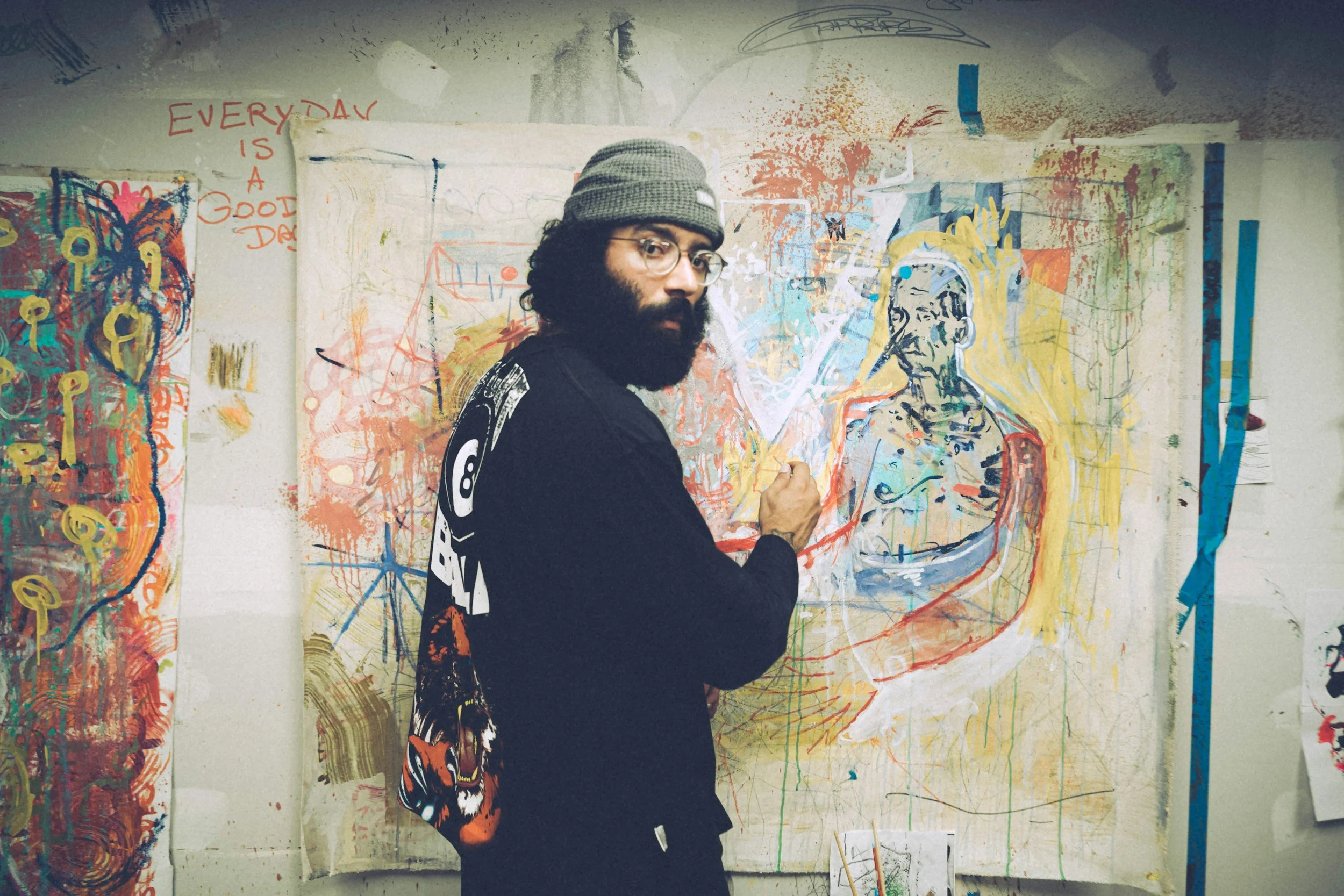
Painting, drawing, photography, mixed-media work, sculpture, ceramics, woodworking, collage, and other creative activities can provide brain injury survivors with opportunities to engage different skills in a supportive and meaningful environment.
Importantly, visual arts should not be viewed as a replacement for medical, neurological, psychological, occupational, or other evidence-based rehabilitation. Rather, they can serve as a complementary component of holistic, person-centered brain injury rehabilitation.
Research increasingly supports the potential value of arts-based interventions across physical, psychological, cognitive, and social domains, although researchers continue to emphasize the need for stronger and more standardized studies.
1. Art Provides an Alternative Form of Self-Expression
One of the most significant challenges following brain injury can be communicating experiences that are difficult to put into words.
A survivor may struggle to explain changes in identity, frustration, grief, anxiety, depression, sensory experiences, or the feeling of being different following an injury.
Visual art can provide another avenue for communication.
A painting does not require someone to find the perfect words. A photograph does not require a person to explain exactly why an image matters to them. A sculpture or mixed-media piece can communicate ideas, emotions, memories, and perspectives in ways that traditional conversation sometimes cannot.
A 2022 scoping review examining storytelling interventions within TBI rehabilitation identified visual art, film, writing, and songwriting as approaches used to support identity reconstruction, emotional processing, meaning-making, and reconnection with others.
This is particularly important because brain injury can fundamentally alter a person's perception of who they are.
Creative expression can become part of the process of answering an important question:
“Who am I now, and what can I still create?”
2. Visual Arts Can Support Emotional Wellbeing
Depression, anxiety, frustration, grief, and reduced self-esteem can accompany life after brain injury.
Creative activities can provide an opportunity to focus attention on something constructive while creating a tangible sense of accomplishment.
A large systematic review and meta-analysis of active visual art therapy included 69 randomized clinical trials involving approximately 4,200 participants across a range of conditions. The researchers found improvements associated with visual art therapy for some health outcomes, although they also noted that overall study quality was low and that most measured outcomes did not demonstrate improvement.
This distinction matters.
The research does not support claiming that visual art automatically improves mental health for every brain injury survivor. Instead, it suggests that visual arts may provide meaningful therapeutic benefits for some people and warrants continued integration and research.
For someone living with brain injury, however, the value can extend beyond a clinical outcome measure.
Finishing a painting can provide accomplishment.
Sharing artwork can provide connection.
Learning a new technique can provide mastery.
Being recognized as an artist can provide an identity that exists beyond the label of “brain injury survivor.”
3. Art Can Encourage Cognitive Engagement
Creating visual art is an active process.
Depending upon the activity, an individual may need to:
Plan what they want to create
Select materials
Sequence multiple steps
Sustain attention
Make decisions
Solve problems
Monitor progress
Adapt when something doesn't work
Remember techniques
Organize materials
Complete a project
These activities can naturally engage cognitive processes that are relevant to everyday functioning.
A 2026 scoping review examining art therapy and technology in neurorehabilitation found reported benefits across areas including motor function, attention, executive function, emotional wellbeing, and therapy engagement, while also emphasizing that existing studies are generally small and methodologically heterogeneous.
This is one reason meaningful creative activities can be particularly valuable within community-based rehabilitation.
The goal isn't necessarily to make someone complete a cognitive exercise disguised as art.
Instead, the cognitive demands emerge naturally because the individual is doing something meaningful.
4. Creating Art Can Support Fine-Motor Skills
Many visual art activities require manipulation of tools and materials.
Painting involves brushes.
Drawing involves pencils, charcoal, or other implements.
Sculpture involves shaping and manipulating materials.
Collage requires cutting, positioning, and assembling.
Photography requires operating equipment and making visual decisions.
These activities can provide opportunities for hand use, coordination, dexterity, and controlled movement.
Research involving stroke survivors provides particularly useful evidence. A systematic review and meta-analysis of seven randomized controlled trials involving 483 people found statistically significant improvements associated with visual arts-based interventions in upper-limb function and activities of daily living, although the researchers rated the certainty of some evidence as low and called for more rigorous research.
For brain injury rehabilitation, this supports the broader concept that creative activities can potentially complement functional rehabilitation when appropriately selected and adapted.
5. Art Can Help Rebuild Confidence
One of the most overlooked consequences of brain injury can be a loss of confidence.
A person who once worked, drove, attended school, maintained a household, participated in sports, or pursued creative interests may suddenly find that previously routine activities have become difficult.
Repeated experiences of failure can affect self-esteem.
Creative activities can provide opportunities for success at an individual's current level of ability.
The project does not have to be perfect.
The individual can modify it.
Try again.
Change direction.
Ask for assistance.
Finish it.
And then look at something they created.
That experience can be powerful.
Rather than focusing exclusively on what the person can no longer do, creative rehabilitation can help shift attention toward:
“Look what I can still do.”
That change in perspective can be an important part of rebuilding identity after brain injury.
6. Visual Arts Can Create Opportunities for Social Connection
Brain injury can be isolating.
Changes in communication, cognition, mobility, employment, transportation, or confidence can make it harder for survivors to maintain previous social networks.
Creative programs can create an alternative pathway into community participation.
An art studio can become a place where people:
Meet others
Share ideas
Teach one another
Receive feedback
Participate in exhibitions
Work collaboratively
Develop friendships
Contribute to a community
The TBI storytelling literature specifically identifies community re-engagement and reconnection with peers, clinicians, families, and communities as potential purposes of creative interventions.
This is important because successful brain injury rehabilitation should not end with improvement on a clinical assessment.
It should ultimately help people participate in life.
7. Art Can Support Identity Reconstruction After Brain Injury
Perhaps one of the most profound benefits of creative engagement is the opportunity to develop an identity beyond the injury.
Brain injury can change how a person sees themselves.
Someone may transition from being:
employee → patient
artist → survivor
parent → recipient of support
student → person who can no longer attend school
These changes can be psychologically difficult.
Creative work provides an opportunity to develop new narratives.
A person can become:
artist.
photographer.
woodworker.
painter.
designer.
creator.
mentor.
exhibiting artist.
These identities can coexist with being a brain injury survivor without being defined by it.
That distinction is central to person-centered rehabilitation.
8. Visual Arts Can Create Purpose and Meaning
Rehabilitation can sometimes become dominated by appointments, assessments, therapies, medications, and functional goals.
These interventions are important—but people also need reasons to get up in the morning.
A creative project can provide that.
Perhaps someone is preparing artwork for an exhibition.
Perhaps they are creating a gift for a family member.
Perhaps they are designing a mural.
Perhaps they are photographing their community.
Perhaps they are creating something that will eventually be sold.
The activity becomes connected to something larger than rehabilitation.
It becomes purpose.
Research examining arts in rehabilitation has identified outcomes across psychomotor and affective domains, supporting the potential value of incorporating creative activity into broader rehabilitation environments.
9. Visual Arts Can Be Adapted to Individual Abilities
One of the strengths of creative programming is its flexibility.
A visual arts activity can be adapted around:
Cognitive fatigue
Vision changes
Hemiparesis
Fine-motor difficulties
Sensory sensitivity
Attention difficulties
Communication differences
Memory impairment
Executive-functioning challenges
Reduced initiation
Physical accessibility needs
For one person, the appropriate activity may be a 15-minute drawing exercise.
For another, it may be a multi-week painting.
Another survivor may thrive in photography, digital art, woodworking, sculpture, or mixed media.
There is no single “right” creative activity for every person with brain injury.
This is consistent with the broader rehabilitation literature, which emphasizes individualized approaches rather than standardized art protocols. A systematic mini-review found that although arts have been used in neurorehabilitation for many years, standardized protocols remain limited.
Visual Arts at The Supported Living Group
At The Supported Living Group (SLG), we believe brain injury rehabilitation should encompass more than clinical appointments.
Our Inspire Arts programming provides opportunities for individuals with brain injury and other disabilities to explore creativity, develop skills, engage with their communities, and experience the satisfaction of creating something meaningful.
Whether an individual is painting a canvas, experimenting with mixed media, creating photography, working with wood, or developing another creative project, the emphasis is not simply on the finished product.
It is on the process.
The planning.
The experimentation.
The problem-solving.
The persistence.
The interaction.
The confidence.
And ultimately, the opportunity to say:
“I created this.”
That can be a powerful statement for someone whose life has been changed by brain injury.
Art Is About More Than Making Something Beautiful
The most important outcome of an arts-based brain injury program may not be the artwork hanging on the wall.
It may be the confidence developed while creating it.
It may be the friendship formed in the studio.
It may be the cognitive strategy practiced without the person realizing they were practicing it.
It may be the fine-motor skill developed through repeated use of a brush.
It may be the opportunity to experience success after a long period of frustration.
Or it may simply be the realization that life after brain injury can still contain creativity, purpose, contribution, and joy.
The evidence base for arts-based rehabilitation continues to develop. Current research supports promising benefits across emotional, psychosocial, motor, cognitive, and engagement-related outcomes, but researchers consistently caution that larger, higher-quality studies are needed.
For rehabilitation providers, that is not a reason to overlook the arts.
It is a reason to continue asking how creative engagement can be thoughtfully integrated alongside established rehabilitation services.
Because recovery isn't simply about getting someone back to where they were.
Sometimes, it is about helping them discover what comes next.
Frequently Asked Questions About Art and Brain Injury Rehabilitation
Can art therapy help people with traumatic brain injury?
Arts-based interventions may support emotional, psychosocial, motor, cognitive, and engagement-related outcomes, although the strength of evidence varies by population and outcome. Visual arts should generally be viewed as a complementary component of rehabilitation rather than a replacement for established medical or therapeutic care.
What types of art are beneficial after brain injury?
Potential activities include painting, drawing, photography, collage, sculpture, ceramics, mixed media, digital art, and other creative activities. The most appropriate activity depends on the person's interests, abilities, goals, and accessibility needs.
Can art help with depression after brain injury?
Research involving broader neurological populations, including stroke survivors, has found favorable effects of visual arts-based interventions on depressive symptoms. However, evidence specifically involving TBI populations remains more limited, so claims should be individualized rather than universal.
Can art improve cognitive skills after brain injury?
Creative activities can involve planning, attention, sequencing, problem-solving, decision-making, and executive functioning. Emerging neurorehabilitation research reports improvements in areas including attention and executive function, but additional high-quality research is needed.
Why is creative expression important after brain injury?
Creative expression can provide opportunities for self-expression, identity reconstruction, emotional processing, social connection, and meaningful participation—areas that are important components of life after brain injury.
Sources & Further Reading
PubMed – Active Visual Art Therapy: Systematic Review and Meta-Analysis
PubMed – Including Arts in Rehabilitation Enhances Outcomes
PubMed – Visual Arts-Based Interventions Following Stroke
PubMed – Storytelling in Traumatic Brain Injury Rehabilitation
PubMed – Integrating Art Therapy and Technology in Neurorehabilitation