

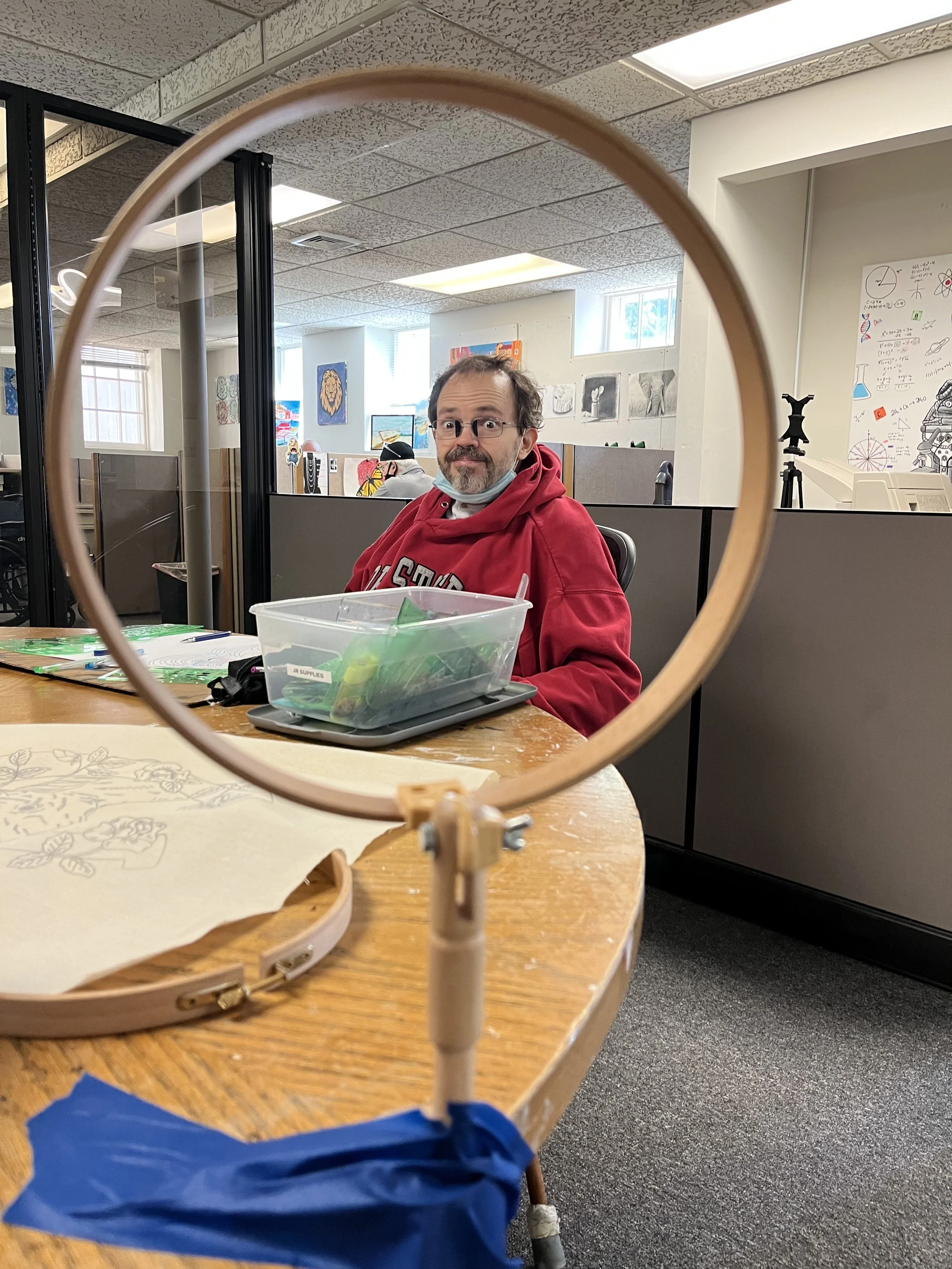
John Rolfe


Meet the Artist
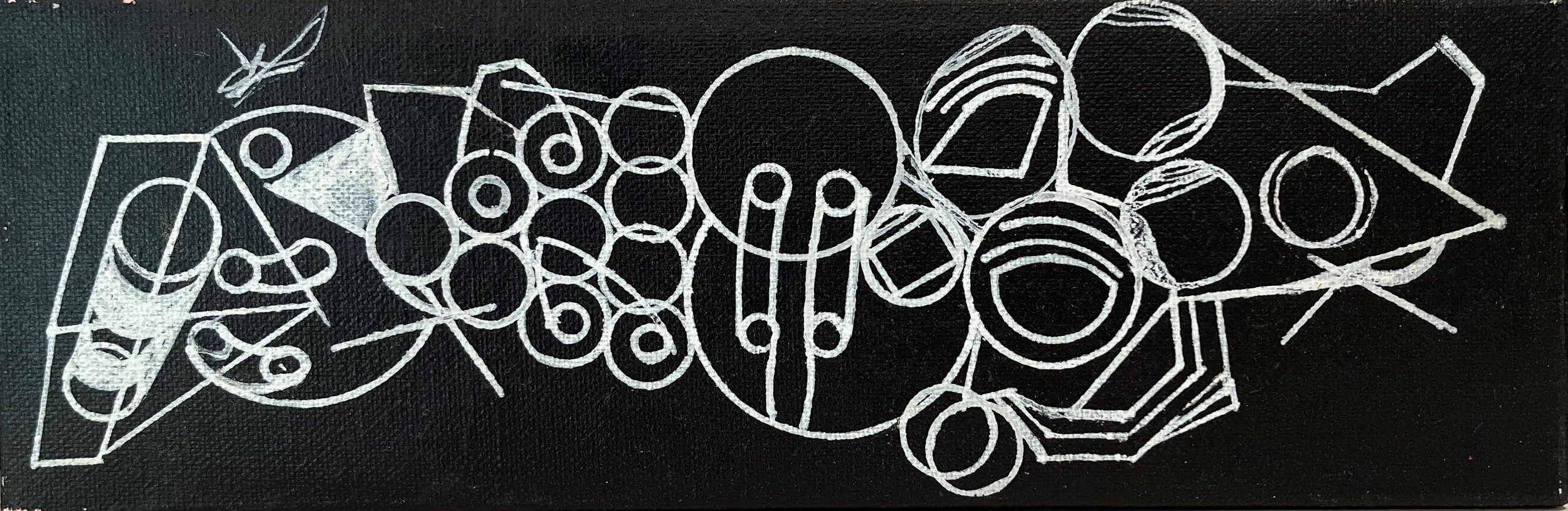
John Rolfe has developed a distinctive artistic style built around line, repetition, structure, and precision. His detailed black-and-white compositions often incorporate intricate patterns and carefully repeated elements, creating visually complex artwork that invites viewers to slow down and explore the details within each piece.
John draws significant inspiration from drafting, architectural design, geometry, and structured forms. These influences can be seen in the precision and organization of his compositions, where individual lines and repeated shapes come together to create larger, cohesive images. His preference for a monochromatic palette further emphasizes the contrast, detail, and structure within his work.
At the heart of John's creative process is an interest in order and organization. He describes his artwork as reflecting a desire to find structure within what can sometimes feel like the randomness of the world around him. Through repetition and careful attention to detail, John transforms individual lines and patterns into highly organized compositions.
His artwork demonstrates how a seemingly simple element—a single line—can become something remarkably intricate when repeated, layered, and carefully arranged. The result is a collection of striking, contemplative, and highly detailed black-and-white artwork that reflects John's unique perspective and creative voice.
John's work is a powerful example of how art can provide a means of exploring patterns, expressing ideas, creating structure, and making sense of the world through personal creativity.
John’s Creative Journey.
John’s creative journey reflects the gradual development of a distinctive artistic practice built around patience, precision, curiosity, and self-expression. Through his involvement with Inspire Arts CT, John has found an environment where he can explore his creativity, develop his artistic skills, and translate the way he experiences the world into highly detailed visual compositions.
His creative process has evolved around his fascination with line, repetition, structure, and pattern. What may begin as a simple line or geometric element can develop into an intricate composition through careful repetition and attention to detail. This process allows John to become deeply engaged in his work while continually challenging himself to see how individual elements can come together to form something larger.
For John, creating art is about more than producing a finished image. The process provides an opportunity to slow down, concentrate, problem-solve, and create a sense of order and organization. His artwork has become a meaningful form of personal expression, allowing him to communicate ideas and perspectives that may be difficult to express in other ways.
Inspire Arts provides artists with opportunities to explore different creative mediums and develop authentic creative expression within a collaborative community. John’s continued artistic development reflects that philosophy. With each new creation, he experiments with composition, repetition, and visual structure while refining a style that has become recognizably his own.
John’s journey demonstrates how an artistic practice can become a pathway toward confidence, focus, self-expression, and personal growth. His detailed black-and-white creations invite viewers to look more closely—and, in doing so, perhaps experience the world through John’s uniquely structured and thoughtful perspective.


John’s artistic style And influences
John Rolfe has developed a distinctive artistic style centered on line, repetition, geometry, structure, and precision. His predominantly black-and-white compositions use carefully arranged lines and repeated forms to create intricate images that can appear both highly ordered and visually dynamic. His interest in drafting and architectural design is evident in the way he approaches composition, treating individual lines and shapes as building blocks that can be organized into increasingly complex patterns.
John’s work shares interesting connections with several influential artists associated with geometric abstraction, Minimalism, and Op Art. British artist Bridget Riley is a particularly relevant comparison. Riley became internationally recognized for her black-and-white geometric compositions, using repetition, carefully controlled spacing, and line to create powerful visual experiences.
John's emphasis on structure and repetition also has parallels with American artist Sol LeWitt, whose work explored lines, geometric forms, patterns, systems, serialization, and repetition. While John's work is distinctly his own, this shared interest in creating increasingly complex compositions from simple, repeated elements provides an interesting connection between his creative practice and the broader history of geometric and conceptual art.
Another relevant influence is Agnes Martin, whose later work incorporated precisely constructed horizontal and vertical lines and measured grids. Martin demonstrated how repetition and seemingly simple geometric structures could become deeply contemplative artistic experiences.
John's preference for black and white also connects his work to the tradition of Op Art, where artists explored the relationship between line, pattern, contrast, and visual perception. The repetition of geometric forms can create a sense of movement, depth, or visual tension, encouraging the viewer to spend time examining how the composition has been constructed.
For John, however, structure serves a purpose that goes beyond visual aesthetics. His artwork reflects his desire to find order within the seemingly random nature of the world around him. Through painstaking attention to line, pattern, and repetition, John creates compositions in which individual elements are carefully organized into a larger whole.
The result is a body of work that is precise, intricate, contemplative, and unmistakably personal—demonstrating how simple artistic principles such as a line, a pattern, or a repeated shape can become a powerful means of creative expression.